

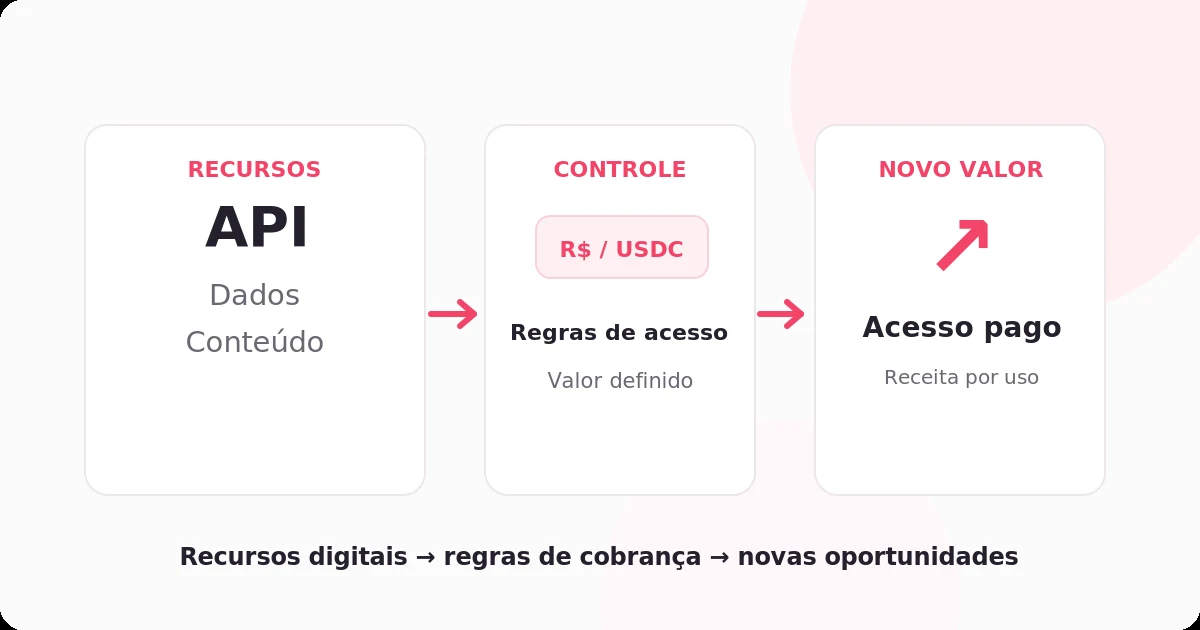
Your business already produces digital value. The question is: are you getting paid every time someone uses that value?
An exclusive report can help a company make a decision. An API can answer in seconds a question that would take hours of work. A dataset can feed market analysis. An artificial intelligence tool can complete an entire task. Every access is useful. But for a long time, turning that usage into revenue meant building sign-up, subscription, API key, invoicing, checkout and reconciliation systems before even finding out whether there was demand.
AZPay Monetization Gateway was designed to change that logic. Instead of building a billing system for each digital product, you define the resource you want to sell, set the commercial terms and use a monetization layer prepared for automated buyers compatible with x402.
To go deeper into the protocol, the states and the implementation architecture, see also Monetizing HTTP resources with x402: how to charge for pages, APIs and agent tools.
That means a new possibility for your company: keep producing what you do best and start selling access to that value.
Discover AZPay Agents and set up your monetization
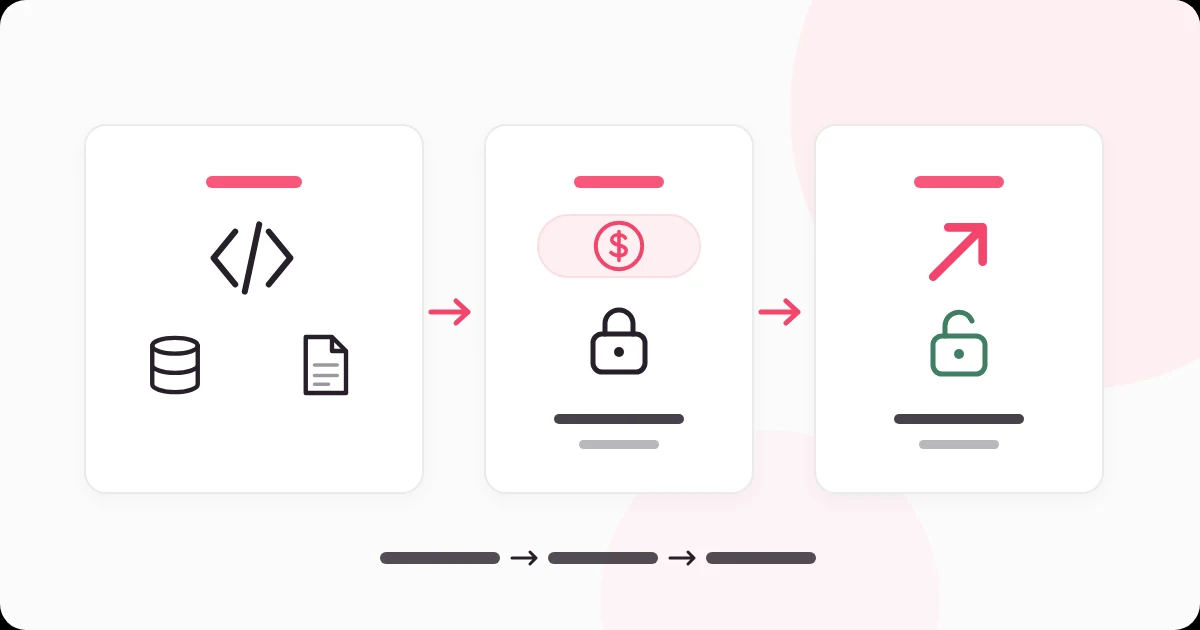
Your next revenue opportunity lies in what you have already built
For years, digital businesses had to choose between a few well-known paths. They either offered content for free and tried to monetize the audience with ads, sold subscriptions, or restricted their services to corporate customers with contracts and custom integrations.
Those models have not disappeared. Subscriptions are still excellent for recurring relationships. Licences make sense when there is continuous use. Ads can sustain open content. But there is a huge category of digital value that does not fit those options so well: one-off access, made at the exact moment the buyer needs something.
Imagine software that only wants to look up one economic indicator. An assistant that needs to summarize a specialist report. A company that wants to check a registration record just once. An agent that requests a risk analysis to finish a task. For these buyers, creating an account, signing up for a monthly plan and waiting for approval can be far more work than the use itself.
This is where the AZPay Monetization Gateway proposal comes in: bringing the charge closer to the moment value is delivered. You do not need to turn every query into a commercial negotiation. You can present the payment condition within the access flow itself, as long as the client being used is compatible with the protocol and the resource is enabled in the chosen environment.
You create the value. AZPay helps turn access into a commercial opportunity.
What is AZPay Monetization Gateway?
AZPay Monetization Gateway is the digital-resource monetization offering that is part of the AZPay Agents family. Its role is to provide a layer of access and charging rules between whoever requests a resource and the service that delivers it.
In practice, this lets you structure offers such as: charging for access to an exclusive page, charging for an API query, selling a dataset, monetizing an MCP tool used by AI agents or setting specific payment conditions for certain digital operations.
The model does not require the customer to buy a large bundle of credits upfront just to run one query. When a compatible client requests a protected resource, the x402 flow can state the payment conditions, receive the authorization and release access after the verification and settlement that apply to the configuration.
For you, the goal is simple: turn existing digital assets into products that can be bought per use. There is no need to abandon your site, your API, your application or the operation that already works. Integration and origin protection must be configured to match your infrastructure, but monetization no longer requires every product to implement all the financial components on its own.
Explore the AZPay Agents monetization solution
How a request can turn into a sale
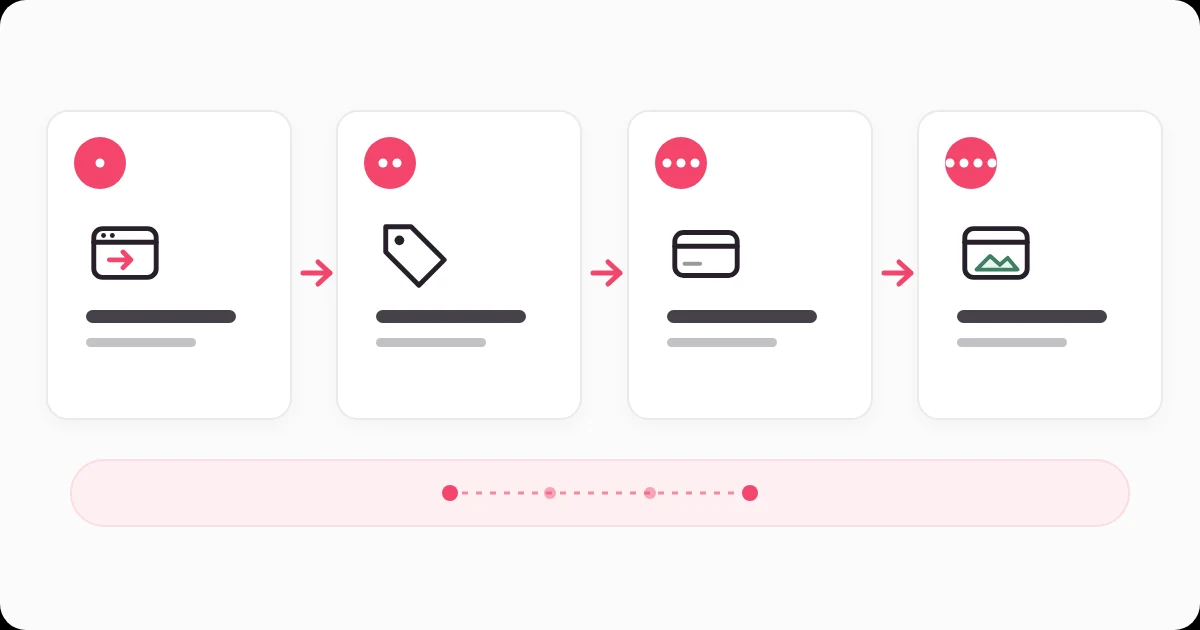
Think of a company that sells access to a competitive intelligence report. The report already exists. The price is set. An external application needs to look up that content to serve a customer.
First, there is a request. The application asks for the resource as it would for any web address. The gateway identifies that this access follows a commercial rule.
Then, there is an offer. Instead of handing over for free something defined as premium, the system presents the conditions for using the resource. For x402-compatible clients, this communication happens within the HTTP flow itself.
Next, there is a payment authorization. The compatible buyer picks an accepted option and authorizes the transaction. The verification and settlement mechanisms depend on the network, the asset, the scheme and the enabled environment.
Finally, there is delivery. When the conditions are met, the protected access can be released. The operation should record payment and delivery separately so that a connection failure is not mistaken for a completed purchase.
The commercial benefit is significant: the buying experience follows the way software and agents already consume digital services. Without requiring a traditional visual checkout for each compatible call. Without turning every one-off query into a long onboarding process.
This flow does not mean that every browser or every AI agent can already pay automatically. The experience depends on compatible clients, wallets and networks. AZPay Agents organizes the offering for this new market, with enablement tied to the actual stage of each capability.
What can you sell with AZPay Agents?
The opportunity becomes clearer when you stop thinking about “protocols” and start thinking about digital products with a price, a buyer and a delivery.
1. APIs: turn every useful response into revenue
Your API may solve an important problem for another application. It can calculate a price, check a piece of data, find information, validate a condition, query a catalogue, produce a score or run an analysis. Even so, many APIs are monetized only through monthly plans and corporate contracts.
With a pay-per-access strategy, you can offer the query as a commercial unit. A buyer uses it only when needed. For the seller, each eligible call can represent a transaction rather than just infrastructure consumption.
Imagine selling a market intelligence query. An agent needs a specific answer to finish an analysis. It does not necessarily want an annual licence. It wants the information, at that moment, with a clear price. Your company already has the endpoint; what is missing is turning its use into a commercial product.
The gateway helps organize this meeting of demand and supply, as long as the route is protected and the supported payment flow has been enabled.
Business opportunity: broaden the ways you sell an API by offering one-off access alongside traditional contracts.
2. Reports and premium content: monetize knowledge, not just audience
Your team publishes studies, research, analyses, expert opinions, knowledge bases or reports that take investment to produce. Part of that material can stay open to attract visitors. Another part may be valuable enough to justify payment.
Paid access per resource opens a commercial alternative: letting a compatible buyer acquire exactly the report or page they want to consult, without necessarily subscribing to the entire collection.
Think of a consultancy that publishes a monthly analysis of a sector. An agent needs that study to prepare a presentation. If the tool being used is compatible with the requested payment, access can be negotiated within the flow itself. The content stays under the control of whoever produced it.
Business opportunity: create a premium pay-per-access offer and reduce exclusive reliance on advertising or subscriptions.
3. Datasets: make your data work as a product
Companies invest in collecting, organizing, cleaning and updating data. These datasets can include sector indicators, price references, historical series, geographic information, structured public information or intelligence developed in-house.
When there is authorization to sell them and the applicable rights and obligations are respected, datasets can stop being just an internal asset and become a new revenue line.
You can design offers per file, per query or per specific dataset. The buyer no longer needs to negotiate for the whole collection when they only want a well-defined delivery.
Business opportunity: sell access to information in the format that applications and agents can consume.
4. MCP tools: monetize the ability to get something done
Not every digital product delivers a file or a conventional API response. Some tools perform a capability: searching a specialized collection, evaluating a hypothesis, generating a classification, querying a system or preparing a structured result.
As MCP integrations grow, these capabilities can become economic units. The product is not “an endpoint”. The product is the useful task that tool makes possible.
Imagine your team has built a specialized document analysis tool. An external agent only needs it at a certain stage of its work. In a compatible integration, the protected call can be tied to a payment condition before the premium result is delivered.
Business opportunity: sell functionality to applications and agents without relying solely on a human interface.
5. AI services: charge for the value of the processing
Generating, analyzing, extracting, classifying and enriching information carry different costs and different value. A simple task may need few resources; another may consume far more processing.
AZPay Monetization Gateway covers the per-request charging model and, where there is proven support in the protocol and in the enabled infrastructure, variable-consumption models within authorized limits.
You set the commercial strategy. What matters for the buyer is understanding the financial commitment before authorizing access; for the seller, it is linking the charge, the measured consumption and the delivery without mixing up one step with another.
Business opportunity: create AI products that can be consumed on demand, with prices aligned to usage and to the capabilities actually available.
A new way to sell without rebuilding everything
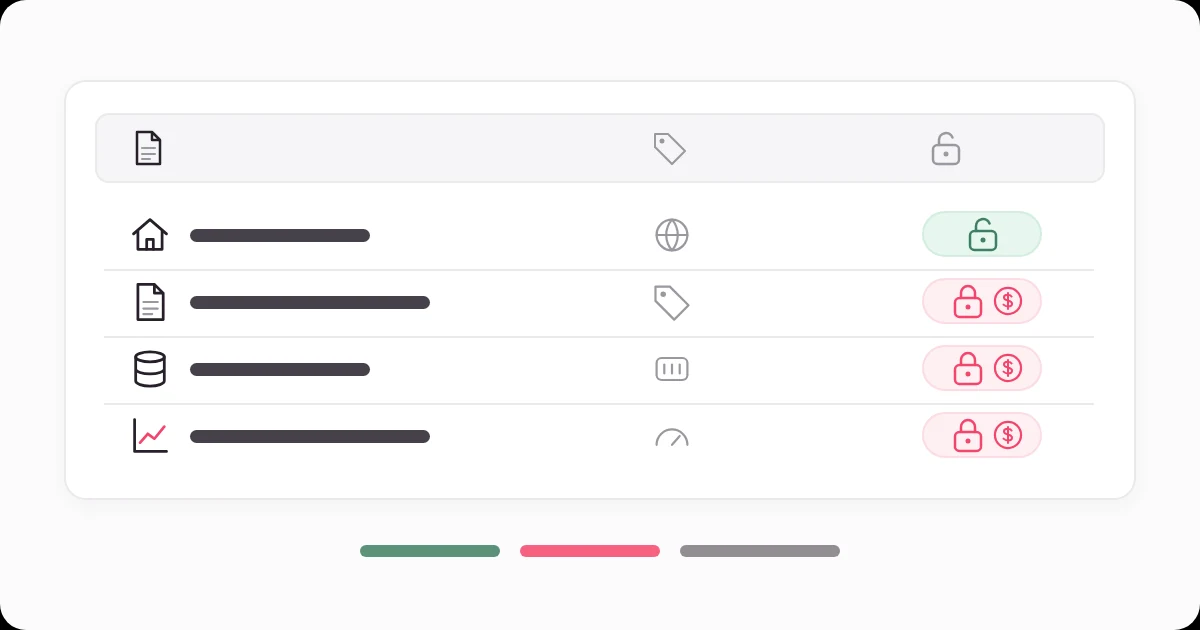
For anyone running a business, the key point is not how many components sit behind a gateway. It is what changes in the commercial operation.
With the AZPay Agents monetization offering, your focus shifts to the offer itself: which content will be free, which access deserves a charge, which buyers can use the resource, how prices will be presented and how revenue will be tracked.
You don’t need to turn your product team into a financial infrastructure team for every new idea. And you can test a paid-access offer without redesigning your whole commercial catalog — while respecting the integration and security requirements and the enabled environment.
The experience we are aiming for is a dashboard where the owner of a resource recognizes their offers and can manage them. Rules are a business tool, not an end in themselves.
Your site is still yours. Your API is still yours. Your data is still yours. The product is access to the value you deliver.
Decide what access is worth — without learning the protocol’s language
Selling something at a known price is different from charging for a task whose cost varies. For AZPay customers, that choice should appear in commercial terms, not as a lesson in technical names.
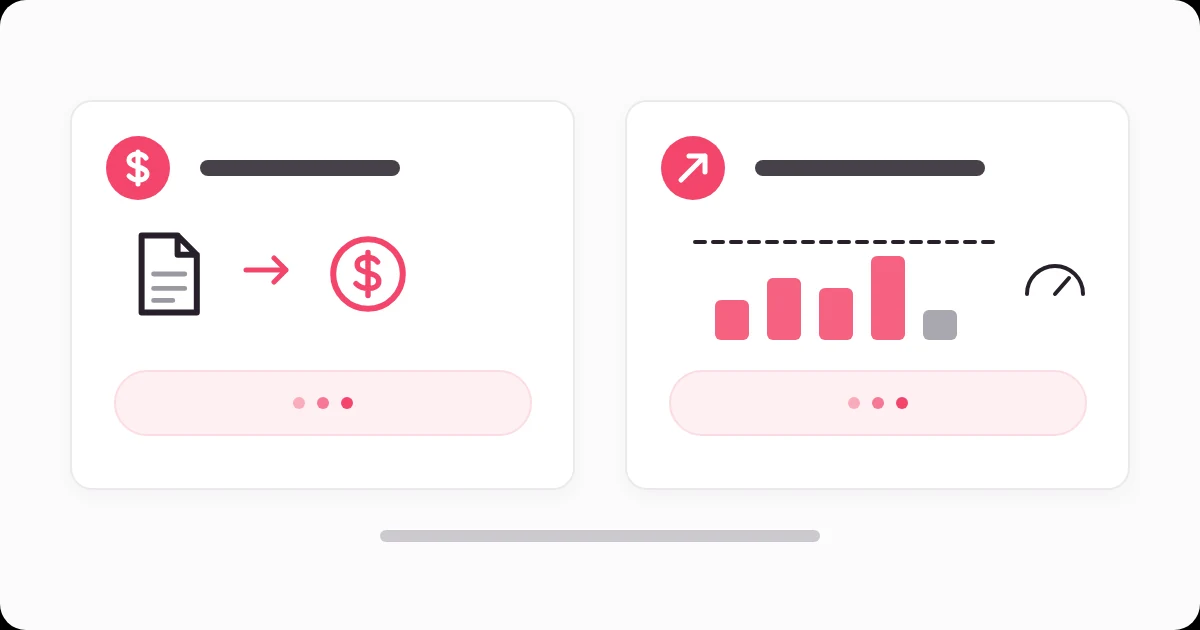
Fixed price: the buyer knows how much they will pay
You sell a report for a set amount. A query always costs the same. A tool performs an operation with a predictable scope. In these cases, it makes sense to show a clear price before the purchase.
Illustrative example: a company decides to charge US$0.05 per access to a specific dataset. The compatible buyer knows the financial terms before authorizing. This amount is only a commercial simulation, not a rate charged or recommended by AZPay.
In the x402 protocol, this kind of scheme may appear under the technical name `exact`. For the business, the question is simpler: “How much does this delivery cost?”
Usage-based price with a cap: the buyer knows the most they can spend
Some tasks vary. The size of an analysis changes. A processing job may consume more or fewer units. The amount of data returned may differ with each query.
Illustrative example: an analysis service specifies that one run may cost up to US$0.20. The final amount depends on the consumption actually measured and on the applicable rules. The cap is the maximum authorized, not an automatic charge of the ceiling.
In the x402 ecosystem, the technical name `upto` describes a mode designed for this kind of maximum commitment, when the scheme, network, asset and facilitator in use actually support this functionality.
For the buyer, the benefit is predictability. For the seller, it is the ability to tie revenue to the service actually provided.
The commercial decision is yours: charge a set amount per delivery or work with a cap for variable consumption. The availability of each mode should be checked in the dashboard of the environment in use.
Who does monetization make the most sense for?
Software and SaaS companies. For businesses that already deliver valuable functionality through APIs, per-access charging can complement existing plans and contracts. A company can keep its main subscription and offer specialized queries separately.
Publishers, content producers and research firms. Those who invest in original information can explore a premium offer for compatible automated consumers, without relying only on visits from human readers.
Data providers. Companies that maintain reliable databases can turn queries and deliveries into clearly priced products, within the rights to use and commercialize that data.
AI tool builders. Those who develop specialized capabilities can offer one-off access to other applications, as long as the payment and call integrations are available.
Companies that want to experiment with new digital products. Not every opportunity has to start as a full platform. An API or valuable content can be the start of a new commercial offer.
If you recognize your business in any of these situations, the next question is not how to implement blockchain. It is which of your resources your customers would already like to buy today.
Your product can stay free where that makes sense — and paid where it delivers special value
Monetization doesn’t have to mean locking down your entire digital presence. Quite the opposite: digital products often need an open part in order to be discovered, evaluated and recommended.
A company can keep its home page public, make its documentation available for free and charge for a premium analysis. It can allow browsing of a catalog and charge only for a processing tool. It can keep a demo API and sell the version that delivers more complete data.
This model makes it possible to design a more sophisticated commercial journey. Free content showcases the quality. The premium resource delivers additional value. Charging happens only where the company has decided to apply a compatible rule.
It is an alternative to the binary thinking of “everything open” or “everything behind a subscription”.
The payment happens between software. The commercial relationship is still yours.
x402 is an open protocol for communicating payment requirements within an HTTP interaction. On its own, it does not determine your business model, does not replace privacy policies, does not settle content rights and does not make any system automatically compatible.
The role of AZPay Monetization Gateway is to bring this possibility closer to the operations of those who sell digital resources. The gateway can handle the payment challenge and the access check. The seller still defines the offer, controls the origin, sets the price and tracks the results.
This does not mean holding the seller’s funds in custody by default. In compatible direct-settlement modes, the transfer can go to the wallet of the configured recipient. Fiat withdrawals, conversion to Brazilian reais and Pix are separate operations, subject to the existence of financial partners, commercial terms and specific approvals; they should not be treated as active features just because x402 is supported.
The goal is to reduce integration complexity for digital monetization, without hiding responsibilities or promising availability where it has not yet been verified.
How to start monetizing with AZPay Agents
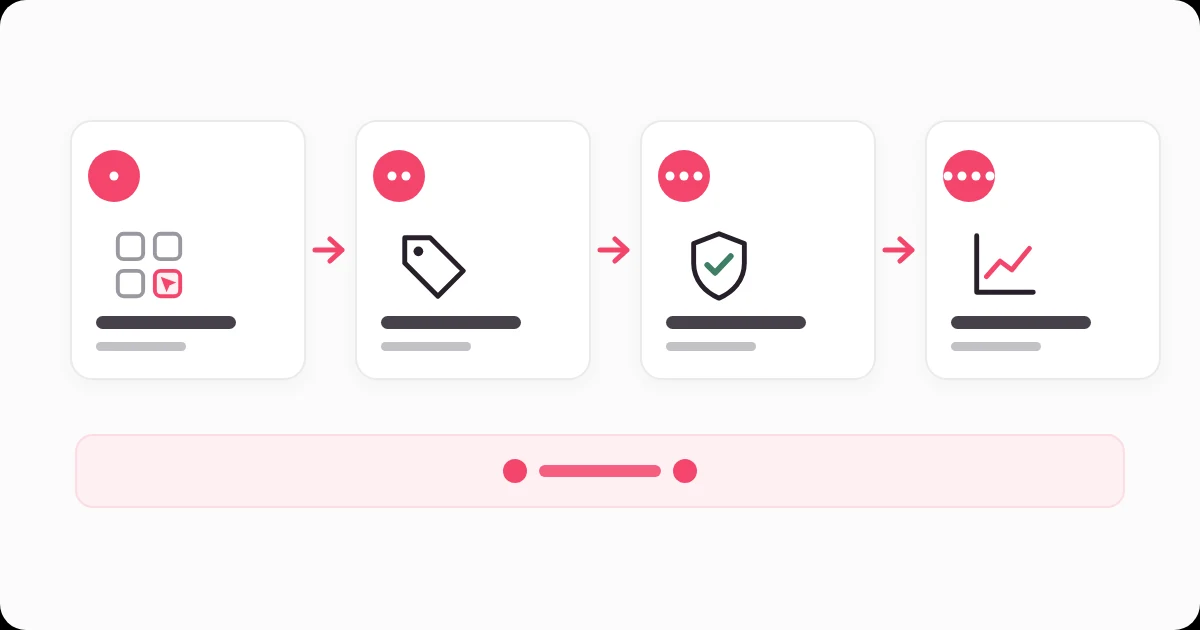
Start with the asset that already has demand. If you have an API used by partners, an exclusive report or a specialized tool, pick a resource whose value can be explained in one sentence. Your first offer doesn’t need to represent your whole portfolio.
Sign in to AZPay Agents. Go to agents.azpay.com.br and use the console access provided by the platform. Find the Monetization area and check which capabilities are enabled for your workspace and environment.
Define the offer. Choose the resource, the charging condition and the intended experience. The access model depends on the configuration of the domain, origin, wallet and supported rules. If the product is on testnet, tests do not represent a commercial charge in production.
Validate before selling. Confirm that the origin is protected, that the rule applies to the right resource and that the test client can interpret the payment and receive the content. Features still flagged as unavailable should not be offered to real buyers.
Track what actually happened. A presented charge, authorization, settlement and delivery are different events. Reliable tracking lets you see where there is interest, which resources are consumed and which opportunities deserve further investment.
The goal is to start thinking about new revenue streams from what your company has already built — using a single management environment, in line with the verified availability of each feature.
Open AZPay Agents and explore Monetization
What changes for your business when agents become buyers too?
Much of digital commerce was designed for the human journey: browsing a page, comparing offers, adding an item to the cart and checking out. AI agents may follow a different path. They receive a task, consult resources, choose available services and return a result.
This opens an opportunity for companies that already have something valuable available digitally. The buyer does not necessarily want to “visit your site”. It may only want to use a capability that sits behind your site.
When that capability has a clear commercial condition and a compatible integration, a new kind of relationship emerges: your digital resource becomes something other applications can buy to carry out tasks.
The transformation is not automatic. Adoption depends on agents that support payments, configured wallets, compatible infrastructure, useful resources and secure execution. But companies that are already structuring the commercial value of their APIs, content and tools may be better prepared to meet this demand as the ecosystem evolves.
AZPay was born to build payment infrastructure. With AZPay Agents, the ambition is to help businesses connect their capabilities to commerce that is also carried out by software — without requiring them to abandon their current operations.
Frequently asked questions about AZPay Monetization Gateway
Do I need to build my own billing gateway?
The whole point of AZPay Monetization Gateway is to spare each digital product from having to build the entire pay-per-access monetization flow on its own. You still need to set up the right integration for your domain, protect the origin and validate the supported environment. The commercial availability of features should be checked in the console.
Do I need to understand blockchain or x402 to get started?
You don’t need to master the protocol specification to assess your commercial offer. Start by defining the resource, who can buy it and what it is worth. The technical team can support the setup and compatibility testing, while the business focus remains on selling access.
Can every AI agent pay automatically?
No. A purchase depends on a client that supports the payment flow and the accepted network/asset. The fact that a piece of software is called an “AI agent” does not mean it has a wallet or is authorized to carry out financial transactions.
Can I monetize an existing website?
The offering covers existing pages and other HTTP resources, as long as domain control, integration and origin protection are possible and enabled. Adding an address is not enough: the direct path to the premium content must be properly protected.
Can I charge for an API or a file without selling a subscription?
Yes, the paid-access-per-resource model is one of the core applications of x402. The operational capability at AZPay depends on the type of integration, the environment and the scheme enabled and tested for that resource.
Can I sell MCP tools to other agents?
That is one of the use cases covered by the AZPay Agents offering. It is important to confirm that the MCP adapter and the buying client support the chosen payment flow. Tool discovery and paid execution may require different policies.
Can I receive payments via Pix?
Don’t confuse a stablecoin settlement with a payout via Pix. Receiving in Brazilian reais, conversion and withdrawal require their own financial services and integrations. Check the availability of the product and of any enabled partner before advertising Pix payouts.
Is there variable charging based on processing?
The product strategy provides for a fixed price and, where there is real compatibility with the protocol and the facilitator, a variable amount up to an authorized ceiling. The second option should not be considered available in every environment or network without operational confirmation.
Can I charge bots that read my content?
A site can offer protected content and communicate payment terms to cooperative, compatible clients. This does not force any crawler to pay, does not guarantee that unauthorized bots will cooperate and does not replace access controls, identification and origin protection.
What should my first monetized product be?
Choose something that solves a specific problem and already has demonstrable value: a specialized query, a premium report, an up-to-date file or a tool with a clear result. A small, understandable and testable offer usually teaches you more about demand than locking down an entire catalog at once.
Your next digital product may already be ready. All that’s missing is charging for access.
Your company doesn’t need to invent a new product category to tap into the agent economy. You may already have everything that matters: a database built over years, an API that partners query every day, a report that is expensive to produce or a tool that solves a task other companies find valuable.
The next step is to turn that value into an offer: decide what will be free, what will be premium, which payment conditions make sense and how compatible buyers will be able to access the resource.
AZPay Monetization Gateway was created to bring monetization closer to the delivery of value. You keep creating what makes your company relevant. AZPay works on the infrastructure that brings that value closer to a digital transaction.
Don’t start with the protocol. Start with the product you want to sell.
Discover AZPay Agents — turn digital resources into revenue opportunities
To dig deeper into the architecture and the specification of the standard, see our technical article Monetizing HTTP resources with x402: how to charge for pages, APIs and agent tools. The protocol’s public reference documentation is at x402 Foundation (opens in a new tab ↗), and the announcement that helped popularize the model is at Cloudflare Monetization Gateway (opens in a new tab ↗).